SQL ALTER TABLE Statement
SQL ALTER TABLE statement is used to modify the table structure, you can add column(s), drop column(s), modify column(s) or work on constraints. Here we will use Student table for practice. In this table we...
by Manzoor Siddiqui · Published September 4, 2015 · Last modified October 20, 2015
SQL ALTER TABLE statement is used to modify the table structure, you can add column(s), drop column(s), modify column(s) or work on constraints. Here we will use Student table for practice. In this table we...
by Manzoor Siddiqui · Published September 3, 2015 · Last modified October 19, 2015
SQL UNIQUE constraint is uniquely identifies each row(s) in a table. You can have multiple UNIQUE constraints defined in a table. It prevents to enter duplicate values on uniquely identified columns that do not...
by Manzoor Siddiqui · Published September 2, 2015 · Last modified October 19, 2015
SQL NULL value represent a field or column where no value is mentioned. NULL value is not equal to zero or blank space. By default a column may contain NULL values. Here we will...
by Manzoor Siddiqui · Published September 1, 2015 · Last modified October 18, 2015
SQL DEFAULT constraint is used to specify and inserts the default value in a column when there is no value specified to insert for a new record. Below query creates a table named ‘Students’...
Articles / Database Administration / SQL Server / SQL Tips and Tricks / Tutorials
by Manzoor Siddiqui · Published August 31, 2015 · Last modified September 24, 2015
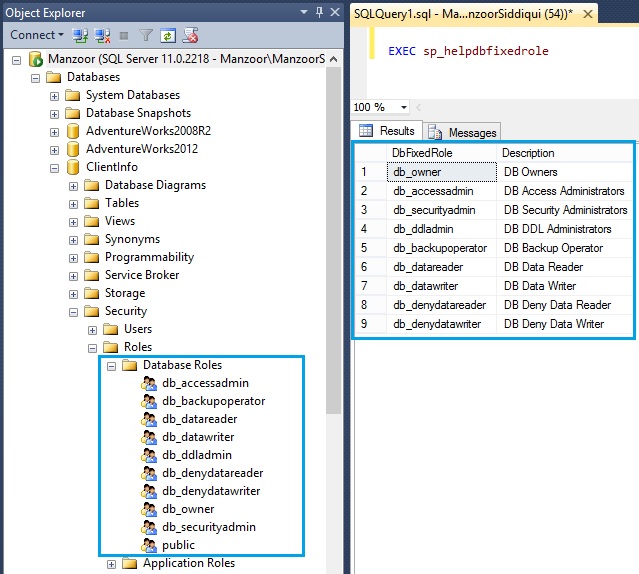
802viewsIn earlier article we have seen Fixed Server Roles, today we will see about fixed database roles in SQL Server. As the name suggests, fixed database roles cannot be removed or modified and performs specific...
by Manzoor Siddiqui · Published August 30, 2015 · Last modified September 24, 2015
SQL SUM() function returns the total sum of all values of a numeric column in a table. You can use SUM function with number values only and also NULL values are ignored during addition....
More